The Vector Connect blog.
Product updates, coaching with data, and the science of recovery, readiness, and performance.
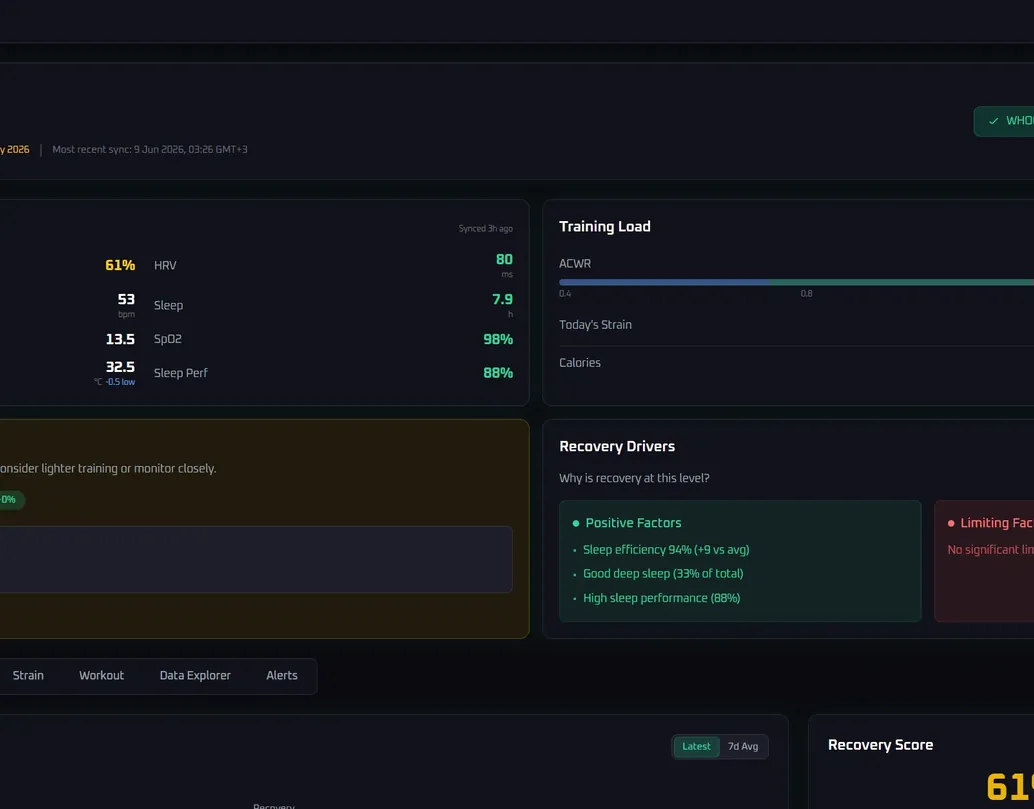
Resting Heart Rate as a Daily Readiness Signal
Resting heart rate is one of the simplest metrics a wearable collects, yet an elevation of just 5 to 7 beats per minute above your personal baseline reliably flags incomplete recovery before an athlete ever steps on the field. Understanding how to read this signal - and how it interacts with HRV and sleep quality - can meaningfully sharpen your daily training decisions.
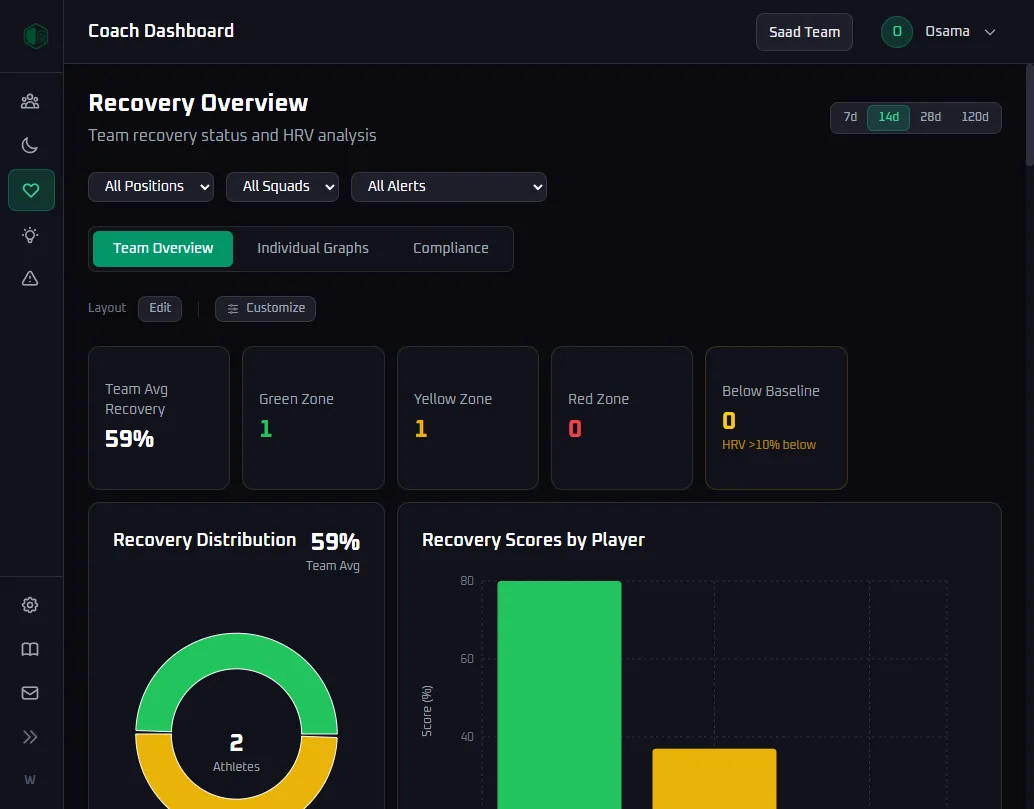
How HRV Tracking Transforms Team Performance
Heart rate variability is the single most predictive metric for athletic readiness, but most teams still ignore it. Here is how coaches using HRV data are gaining a measurable edge over their competition.
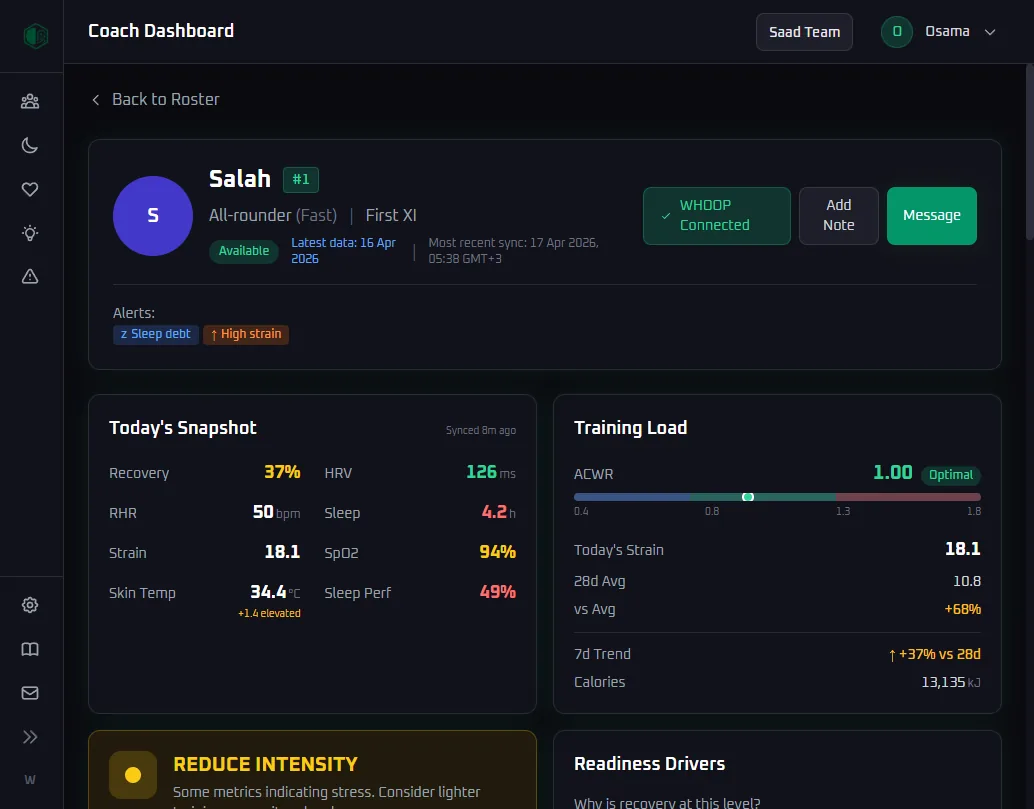
The Science Behind Recovery Scores
A recovery score is not just a number. It is a composite of HRV, resting heart rate, sleep performance, and respiratory rate synthesized into a single daily signal. We break down exactly how it is calculated and why it works.
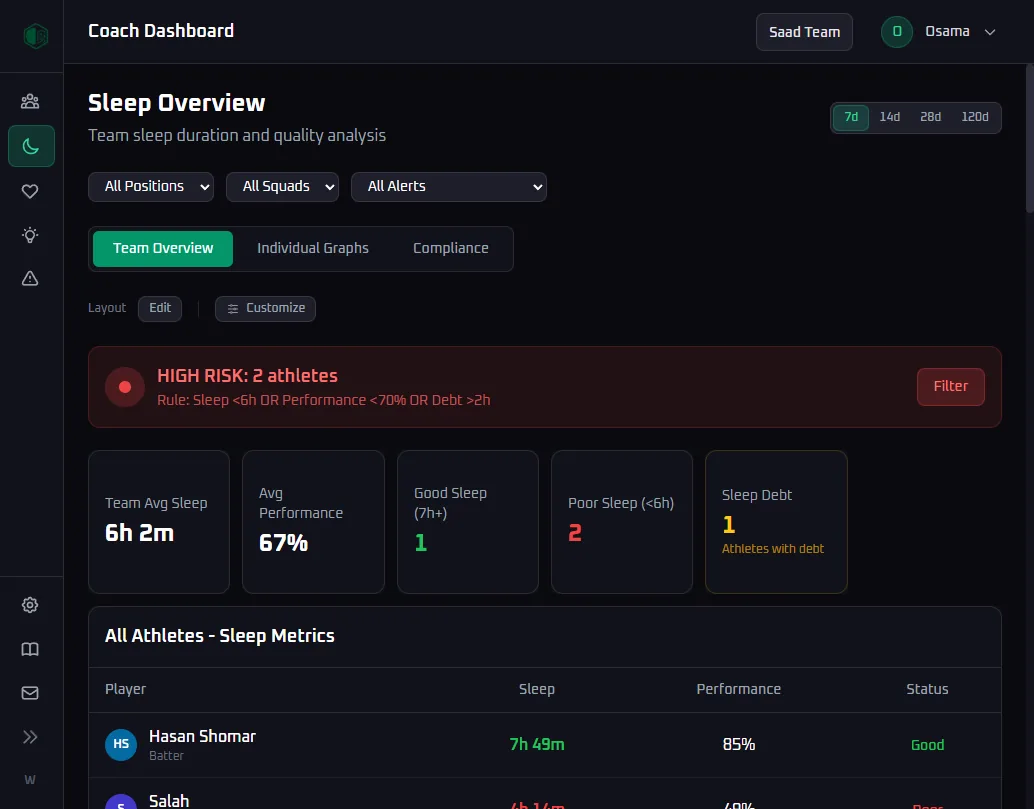
Sleep Debt: The Hidden Performance Killer
Athletes routinely underestimate how much accumulated sleep debt is costing them, in reaction time, decision making, and injury risk. The data is stark, and the fix is simpler than most teams think.
Strain vs Recovery: Finding Your Optimal Training Balance
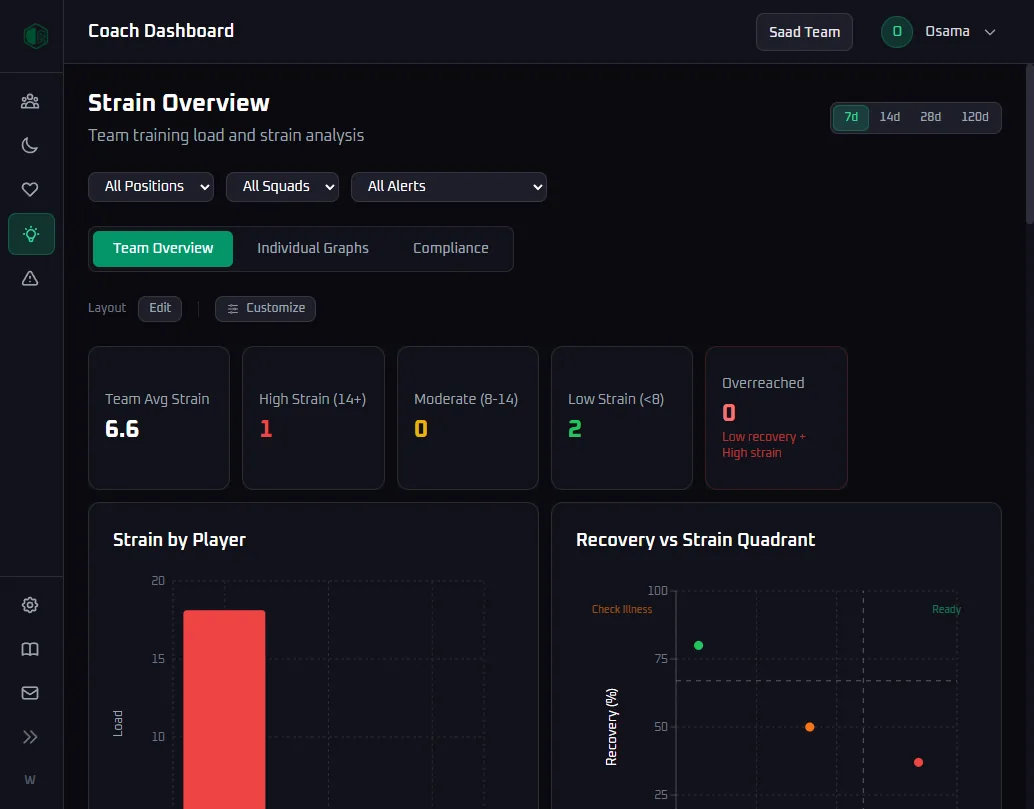
Training load and recovery capacity exist in a constant tension. Push too hard without adequate recovery and performance drops, not rises. This guide explains how to read your strain to recovery ratio and train in the optimal zone.
Why Coaches Need Wearable Data to Prevent Injuries
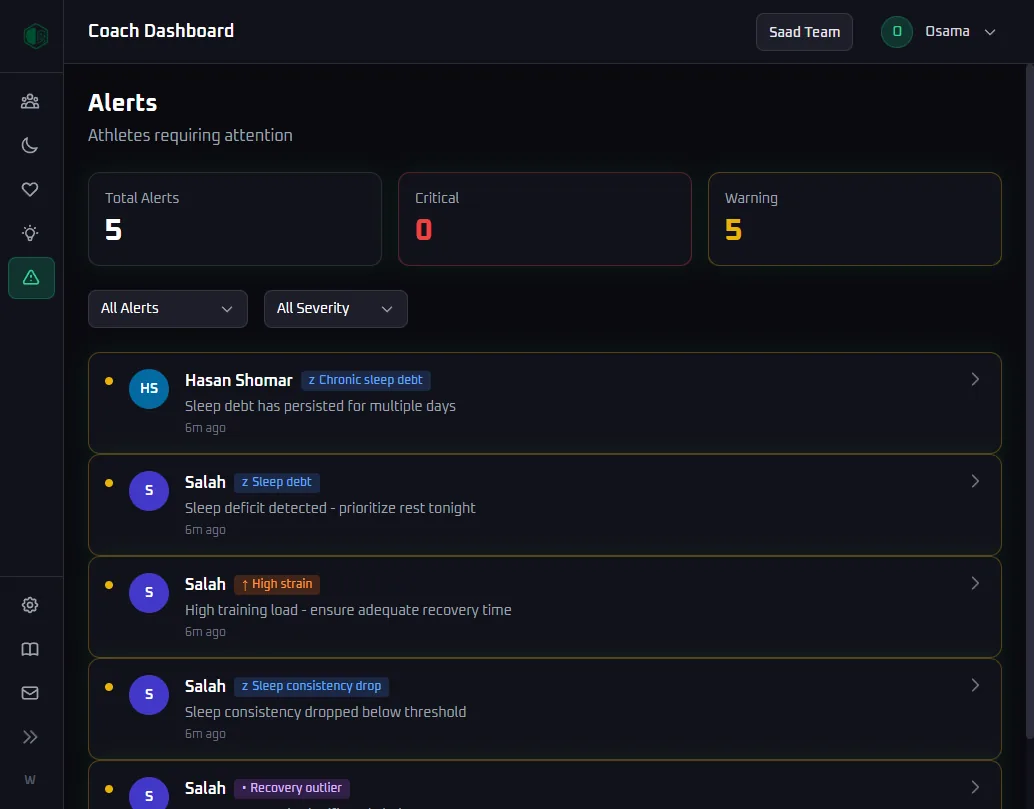
Soft tissue injuries do not come out of nowhere. They follow weeks of accumulated load, poor sleep, and suppressed HRV that went unnoticed. Wearable data gives coaches the early warning system they have never had before.
The ACWR Rule: How Much Training Load is Too Much
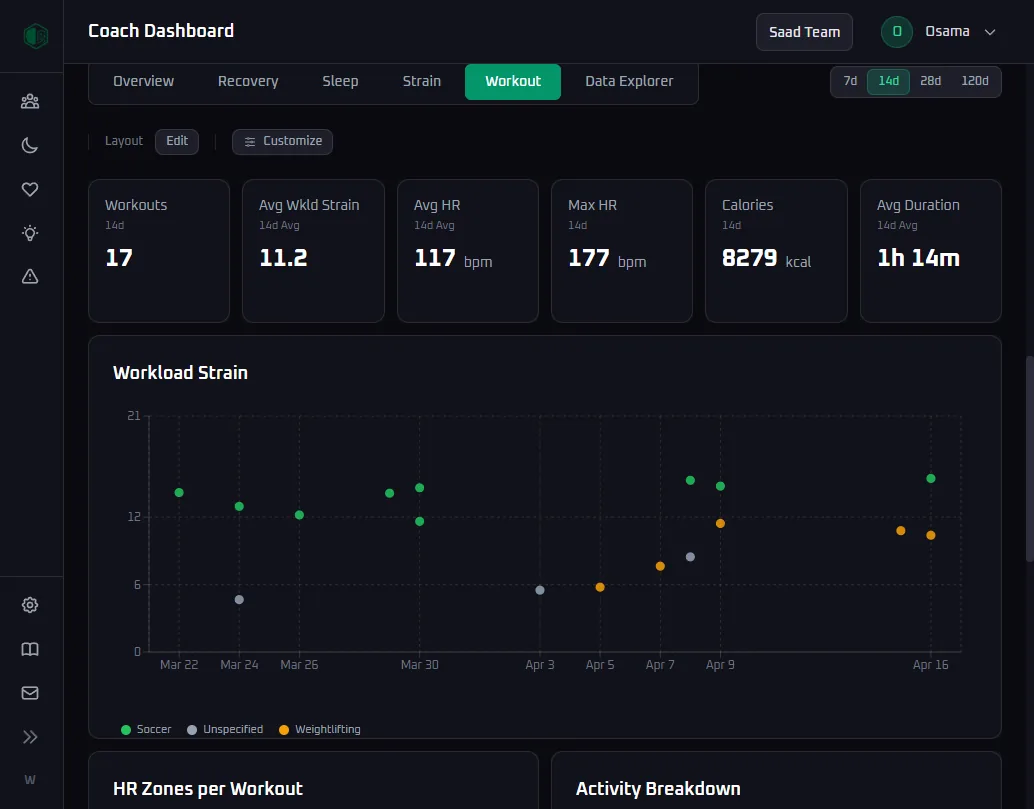
The acute to chronic workload ratio is one of the few sports science metrics with solid injury data behind it. Stay inside the 0.8 to 1.3 window and the injury curve stays flat. Step outside and it climbs fast. Here is how to read it.