The Science Behind Recovery Scores
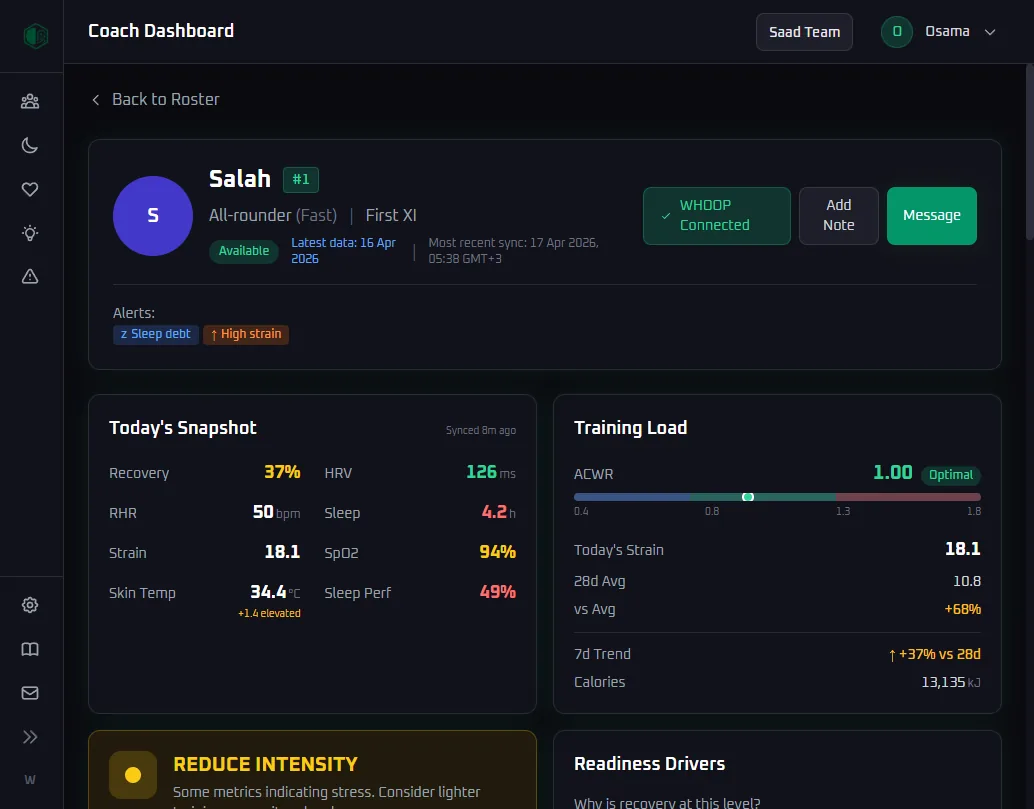
WHOOP's recovery score is not a single measurement — it's a proprietary algorithm that synthesizes four physiological signals collected during sleep: heart rate variability, resting heart rate, respiratory rate, and sleep performance (a function of sleep duration against your personal sleep need). Each metric is weighted and compared against your personal historical baseline, not population averages. This is what makes it meaningfully different from simpler readiness metrics.
HRV carries the most weight in the calculation because it has the strongest evidence base for predicting next-day performance capacity. Resting heart rate provides complementary signal — an elevated RHR paired with suppressed HRV is a more reliable low-recovery indicator than either metric alone. Respiratory rate, often overlooked, is particularly useful for catching early signs of illness before symptoms appear.
The score is expressed as a percentage: 67–100% is green (ready to push), 34–66% is yellow (proceed with caution), and 0–33% is red (protect and recover). These thresholds are calibrated to your personal data over time, so a score of 70% means different things in your first week of wearing WHOOP versus after six months of baseline data has been collected. The longer you wear it, the more personalized and accurate the signals become.
For team applications, the individual recovery score becomes most powerful when viewed in aggregate. A team where 40% of players are in the red on a Tuesday before a Saturday game day needs a different week of training than one where 80% are in the green. Vector Connect makes this aggregate view available to coaches without requiring them to log into each athlete's individual WHOOP account.
Ready to put this into practice?
Join the Vector Connect waitlist and be first to coach and train with real WHOOP data.
Join Waitlist