VC logo
← Back to Blog
Coaching

How HRV Tracking Transforms Team Performance

Vector Connect Team·2026-04-15·6 min read

Heart rate variability — the beat-to-beat variation in time between heartbeats — is the nervous system's report card. When HRV is high, the body has recovered well and is ready to absorb training stress. When it drops, that's a signal the system is under load, whether from hard training, poor sleep, travel, or psychological stress. For coaches managing a roster of athletes, HRV data is the closest thing to a daily readiness X-ray for each player.

The most common coaching mistake is treating every player's HRV in isolation. A reading of 65ms means very different things for a player whose baseline is 90ms versus one whose baseline is 55ms. What matters is deviation from personal baseline — specifically, a suppression of more than 8–10% from a 7-day rolling average is a reliable signal to reduce training intensity or skip high-load sessions entirely.

Teams that have integrated HRV-informed training see two consistent results: first, a reduction in soft-tissue injuries because they catch overreach before it becomes a problem; second, better performance on game day because athletes arrive having been loaded appropriately across the week. The data doesn't make the coaching decision — it informs it. The coach still decides whether an athlete plays. HRV just removes the guesswork about who is physiologically ready.

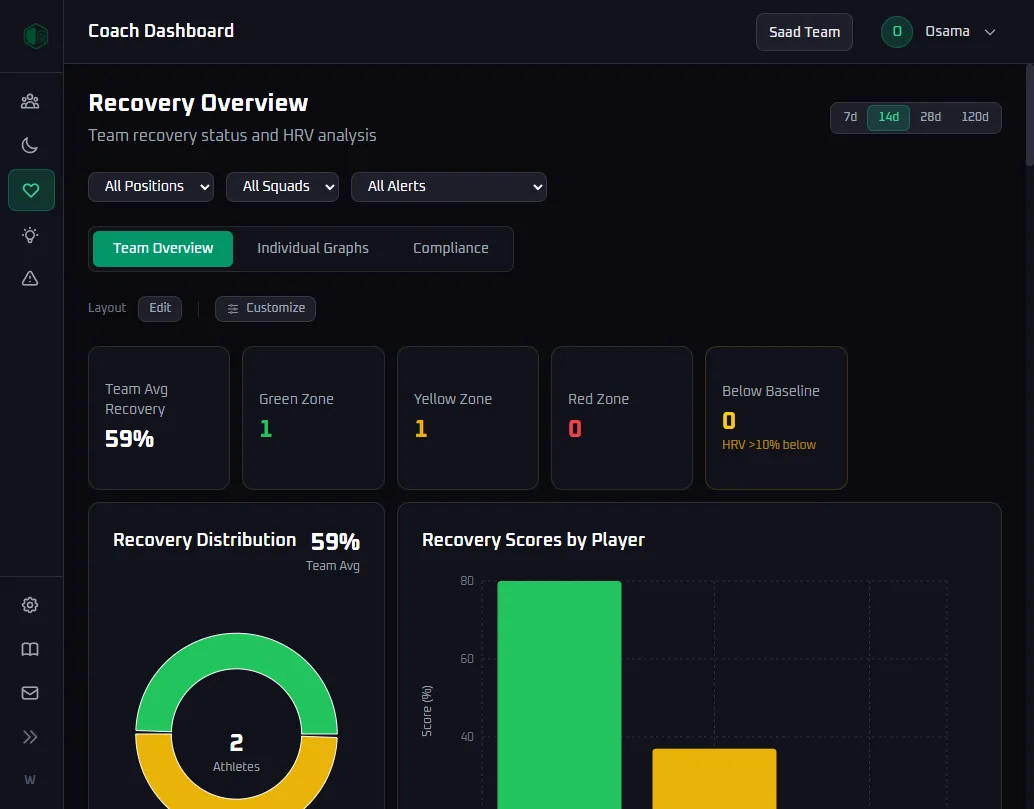
Vector Connect aggregates every athlete's HRV trend and surfaces deviation alerts automatically. Coaches see at a glance which players are trending down and by how much — without having to manually review individual WHOOP apps. The roster view turns individual data points into a team-wide picture, making HRV-informed coaching practical at scale for the first time.

Ready to put this into practice?

Join the Vector Connect waitlist and be first to coach and train with real WHOOP data.

Join Waitlist