Sleep Debt: The Hidden Performance Killer
Sleep debt is cumulative. Losing 90 minutes of sleep on Monday doesn't just affect Tuesday — it compounds across the week, degrading reaction time, decision-making speed, and emotional regulation in ways that athletes consistently underestimate. Research from the Stanford Sleep Lab shows that athletes operating on six hours of sleep perform as if they are legally impaired, yet most report feeling "fine" because chronic sleep restriction also impairs the brain's ability to accurately self-assess fatigue.
WHOOP tracks sleep need against sleep performance on a rolling basis, giving athletes a real-time picture of accumulated sleep debt. What's striking in practice is how common significant debt is even among professional athletes who think they're sleeping well. Late-night travel, early morning training sessions, and inconsistent sleep schedules create debt that accumulates invisibly until it surfaces as a soft-tissue injury, an illness, or a sharp drop in performance at the worst possible moment.
The fix is not as complicated as most athletes assume. Sleep debt above two hours has measurable performance consequences, but it can be meaningfully addressed within 72 hours through sleep extension — going to bed 30–45 minutes earlier rather than sleeping in, which disrupts circadian rhythm. The consistency of sleep and wake times matters more than absolute duration for most athletes.
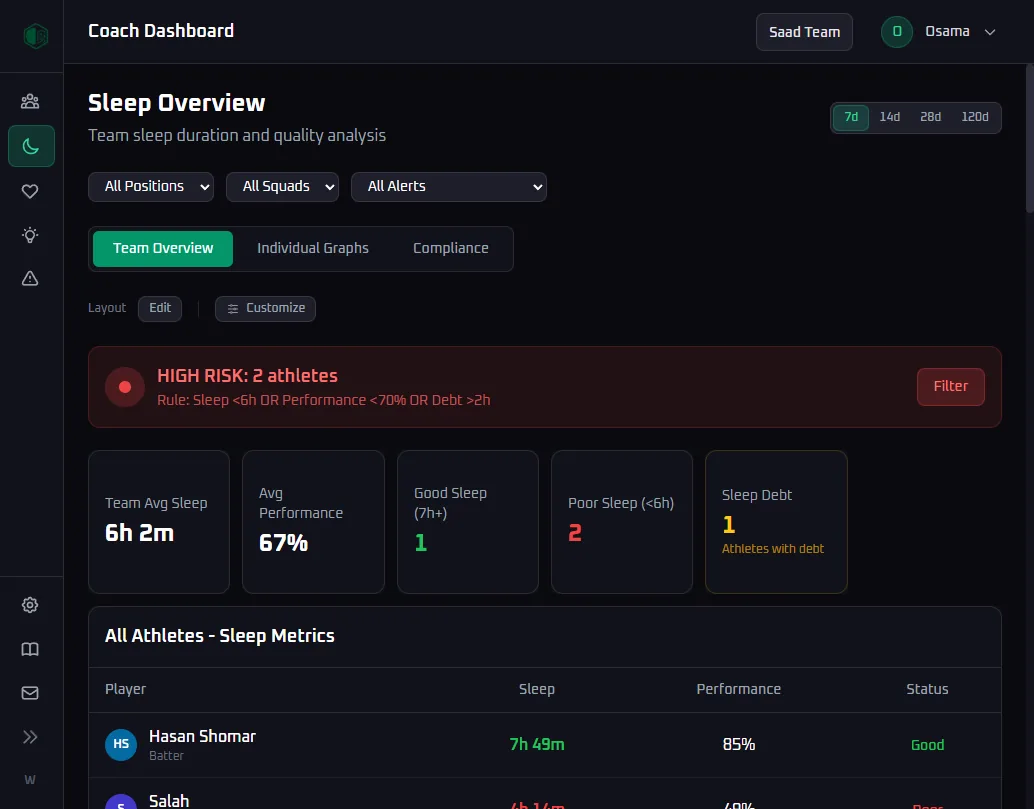
For coaches, sleep debt data changes the conversation from "did you sleep enough?" to "here's how much debt you've accumulated this week and what we're going to do about it before Saturday." Vector Connect surfaces sleep debt prominently in each athlete's profile so coaches can address it proactively rather than reactively.
Ready to put this into practice?
Join the Vector Connect waitlist and be first to coach and train with real WHOOP data.
Join Waitlist