Strain vs Recovery: Finding Your Optimal Training Balance
WHOOP's strain score measures cardiovascular load on a 0–21 scale, calculated from the intensity and duration of elevated heart rate throughout the day. A strain of 8–13 represents light to moderate effort — maintenance work. A strain above 17 is maximal effort territory, the kind of day that requires significant recovery resources to absorb. The key insight is that strain doesn't just come from training: meetings, travel, heat exposure, and psychological stress all contribute to the daily total.
The strain-to-recovery relationship operates like a credit system. Every high-strain day withdraws from your recovery reserve; every well-slept, low-strain day makes a deposit. Problems arise when athletes consistently withdraw more than they deposit — a pattern called overreaching that, if sustained for weeks, becomes overtraining syndrome, which can take months to resolve. The acute:chronic workload ratio (ACWR) formalizes this: a rolling ratio above 1.5 is associated with sharply elevated injury risk across multiple sports.
The optimal training zone sits between ACWR 0.8 and 1.3: enough cumulative load to drive adaptation, not so much that recovery capacity is overwhelmed. Athletes in this zone show progressive fitness gains without the injury spikes seen in athletes who spike their load without corresponding recovery. The challenge is that without objective data, it's nearly impossible to know where you are in this ratio on any given day.
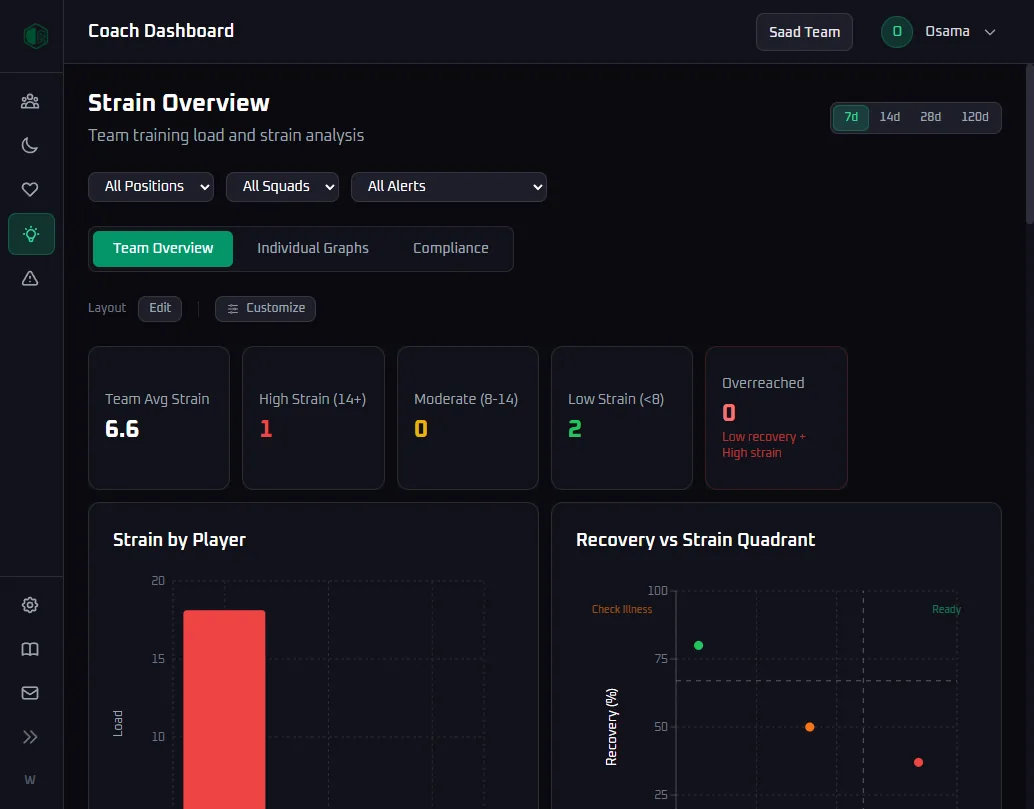
Vector Connect visualizes the strain versus recovery relationship over time so both athletes and coaches can see the balance clearly. When an athlete has had three consecutive high-strain days without corresponding recovery scores, the dashboard flags it — not to override the coach's judgment, but to give that judgment something real to work with.
Ready to put this into practice?
Join the Vector Connect waitlist and be first to coach and train with real WHOOP data.
Join Waitlist